
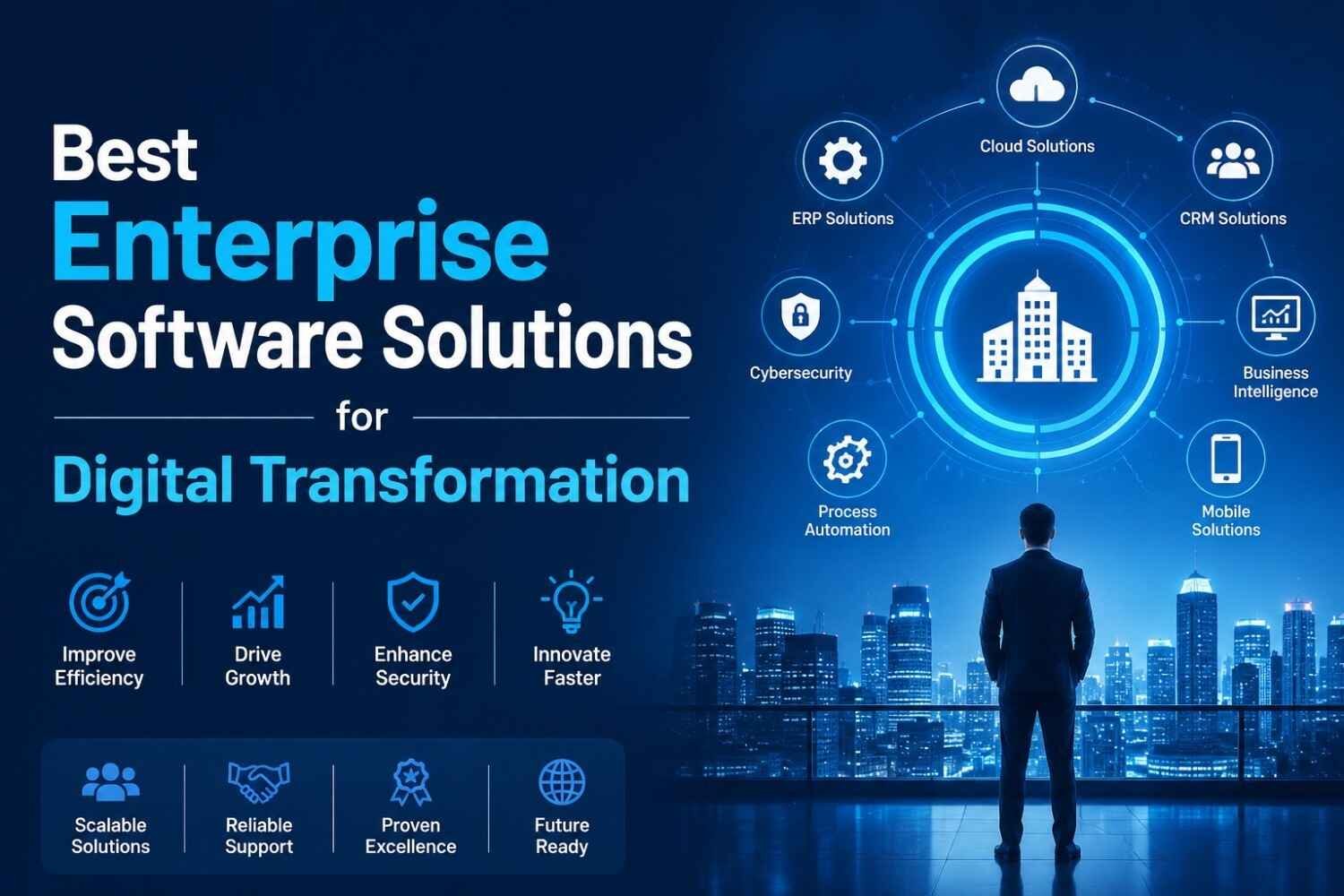
In today's highly competitive digital economy, organizations must embrace digital transformation to remain competitive, improve operational efficiency, and deliver exceptional customer experiences.
Modern enterprise software solutions help businesses automate workflows, improve collaboration, strengthen cybersecurity, optimize customer relationships, and make data-driven decisions using Artificial Intelligence (AI).
Whether you're a startup scaling rapidly or a multinational enterprise, selecting the right software ecosystem can significantly impact productivity and profitability.
What is Enterprise Software?
Enterprise software refers to applications designed to help organizations manage large-scale business operations.
These platforms typically support Business Process Automation, Customer Relationship Management (CRM), Enterprise Resource Planning (ERP), Human Resource Management, Supply Chain Management, Project Management, Business Intelligence, Cloud Infrastructure, AI Automation, and Cybersecurity.
Unlike consumer software, enterprise applications are built for scalability, security, compliance, and integration.
Why Digital Transformation Matters
Digital transformation is no longer optional. Organizations adopting enterprise software experience higher operational efficiency, reduced manual work, better customer satisfaction, faster decision making, increased profitability, improved employee collaboration, stronger cybersecurity, and better compliance management.
Companies investing in digital transformation often gain significant competitive advantages through automation and intelligent analytics.
Best Enterprise Software Solutions
1. Enterprise Resource Planning (ERP)
ERP software integrates core business functions into one centralized system. It manages finance, accounting, manufacturing, procurement, inventory, sales, and supply chain.
Benefits include centralized data, improved reporting, better inventory management, financial transparency, and workflow automation. Popular ERP capabilities include cloud deployment, AI-powered forecasting, and real-time dashboards.
2. Customer Relationship Management (CRM)
CRM software helps organizations manage customer interactions throughout the sales lifecycle. Key Features: Lead management, contact management, sales automation, marketing automation, customer support, email campaigns, and AI recommendations.
Benefits include higher sales conversion, better customer retention, personalized marketing, and faster response times.
3. Business Intelligence (BI)
Business Intelligence software converts raw business data into actionable insights. Modern BI platforms provide interactive dashboards, data visualization, predictive analytics, KPI monitoring, financial reporting, and executive dashboards.
Benefits: Smarter business decisions, real-time reporting, improved forecasting, and performance optimization.
4. Artificial Intelligence Software
AI is transforming enterprise operations. Applications include predictive analytics, intelligent automation, AI chatbots, customer support, fraud detection, recommendation engines, and document processing. AI dramatically reduces repetitive work while increasing productivity.
5. Cloud Computing Platforms
Cloud technology is the foundation of digital transformation. Benefits include remote accessibility, high scalability, lower infrastructure costs, automatic updates, disaster recovery, and secure backups. Cloud-based enterprise software supports hybrid and remote work environments.
6. Workflow Automation Software
Business automation eliminates repetitive manual tasks. Common automations include approval workflows, employee onboarding, invoice processing, marketing automation, HR operations, and customer onboarding.
Benefits: Lower operational costs, faster execution, reduced human error, and improved productivity.
7. Human Resource Management Software (HRMS)
HR software simplifies workforce management. Core modules: Payroll, attendance, leave management, recruitment, employee performance, and training management.
Benefits: Improved employee experience, compliance management, automated payroll, and better workforce planning.
8. Supply Chain Management Software
Supply chain software provides end-to-end visibility. Functions include inventory optimization, warehouse management, logistics, procurement, and demand forecasting.
Benefits: Lower inventory costs, faster deliveries, and better supplier collaboration.
9. Cybersecurity Solutions
Cybersecurity is critical for every enterprise. Essential security software includes endpoint protection, identity management, multi-factor authentication, data encryption, SIEM platforms, Zero Trust Security, and Cloud Security.
Benefits: Reduced cyber threats, regulatory compliance, and business continuity.
10. Enterprise Collaboration Software
Modern businesses require effective collaboration. Features include video conferencing, team messaging, file sharing, project collaboration, and knowledge management.
Benefits: Better communication, remote work support, and faster decision-making.
Essential Features to Look For
- Cloud deployment
- AI-powered automation
- Data analytics
- API integrations
- Mobile compatibility
- Enterprise-grade security
- Scalability
- Multi-language support
- Compliance certifications
- Role-based access control
Benefits of Enterprise Software
- Increased Productivity – Automation significantly reduces repetitive work.
- Better Customer Experience – CRM platforms improve customer engagement.
- Cost Savings – Automation lowers operational expenses.
- Improved Collaboration – Teams work efficiently from anywhere.
- Better Decision Making – Business Intelligence enables data-driven decisions.
- Higher Security – Advanced cybersecurity protects enterprise data.
- Business Scalability – Cloud platforms grow alongside the organization.
Future Trends (2026)
- Generative AI
- AI Agents
- Autonomous Workflows
- Hyperautomation
- Intelligent ERP
- Predictive Analytics
- Edge Computing
- Multi-Cloud Platforms
- Zero Trust Security
- Digital Twins
- Low-Code Development
- Robotic Process Automation (RPA)
How to Choose the Right Enterprise Software
Before investing, evaluate business objectives, budget, scalability, security requirements, vendor support, integration capabilities, user experience, compliance needs, AI capabilities, and total cost of ownership.
Frequently Asked Questions (FAQ)
What is enterprise software?
Enterprise software is a collection of business applications that help organizations manage operations, employees, customers, finance, and analytics from a centralized platform.
Why is digital transformation important?
Digital transformation improves efficiency, reduces operational costs, enhances customer experience, and enables businesses to remain competitive.
Which enterprise software is most important?
The most widely adopted categories include ERP, CRM, Business Intelligence, Cloud Computing, AI Automation, HRMS, and Cybersecurity.
Is cloud software better than on-premise software?
Cloud software generally offers better scalability, lower maintenance costs, faster deployment, and easier remote access, while on-premise solutions may suit organizations with strict data residency or customization requirements.
Conclusion
Digital transformation is reshaping how organizations operate, compete, and grow. Investing in the right enterprise software solutions—such as ERP, CRM, Business Intelligence, AI-powered automation, cloud platforms, cybersecurity tools, and workflow automation—helps businesses improve efficiency, reduce costs, strengthen security, and deliver better customer experiences.
By carefully assessing your business goals, scalability needs, integration requirements, and long-term technology strategy, you can build a future-ready digital ecosystem that supports sustainable growth and innovation.